Our Water Footprint: Understanding to Protect
Freshwater is a vital common good essential for all forms of life on Earth. However, its availability is increasingly threatened by climate change, pollution, and population growth.
Knowing how much water we consume is key to promoting the rational and sustainable use of the planet’s water resources.
The water footprint is an indicator that quantifies the total volume of freshwater consumed or polluted. This calculation includes both the direct use we make in our daily activities (drinking, cooking, hygiene) and the indirect consumption required to produce the food, clothing, and other goods and services we use.
The calculation takes into account all the water we use every day—both the water we can see directly, such as when we cook or wash, and the water we don’t see but is behind the products and services we consume. For example, the water used to produce the food we eat or the clothes we wear.
It is important to understand that the water we use in our daily activities, whether for cooking or cleaning, can easily become contaminated. For instance, when used to wash dishes, clothes, or for personal hygiene, it mixes with dirt, food waste, soaps, detergents, and chemicals that alter its composition, turning it into wastewater. This contamination makes it unsuitable for human consumption and harmful to the environment if not properly treated.
The same happens with water used in industrial or artisanal production processes, which can cause physical, chemical, or biological changes that contaminate water and limit its later use.
The concept of the water footprint was created in 2002 by Arjen Hoekstra, founder of the Water Footprint Network, while working at the UNESCO-IHE Institute for Water Education.
Measuring our water footprint helps us understand how our decisions impact the availability, quantity, and quality of water on the planet, and help us to take responsibility for protecting this shared, limited and essential resource for life.
The Importance of Freshwater
Freshwater is a vital resource. Caring for it and using it sustainably is crucial because it is scarce and limited.
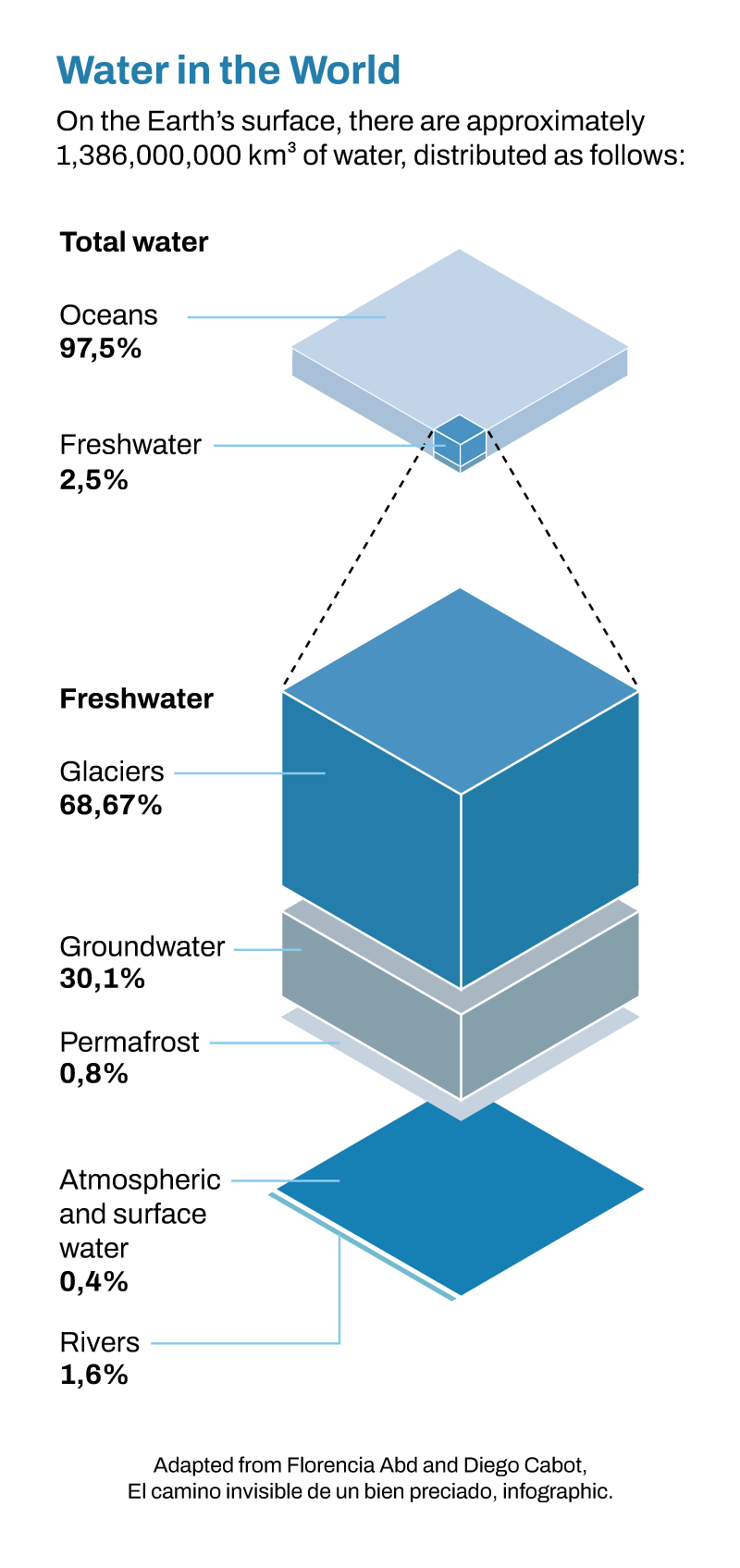
Although 70% of our planet’s surface is covered with water, only 2.5% of it is freshwater, and not all of that is available for human use and consumption.
This means that only a small fraction of Earth’s freshwater is truly accessible for living beings.
If we pictured all the water in the world as a bucket, just one drop would represent accessible freshwater—and that drop would already be under threat from factors such as climate change, pollution, and overuse.
Learn more about how water is distributed on the planet. Where is the water? (UNESCO World Water Assessment Programme. In English and Spanish).
Direct Water Consumption
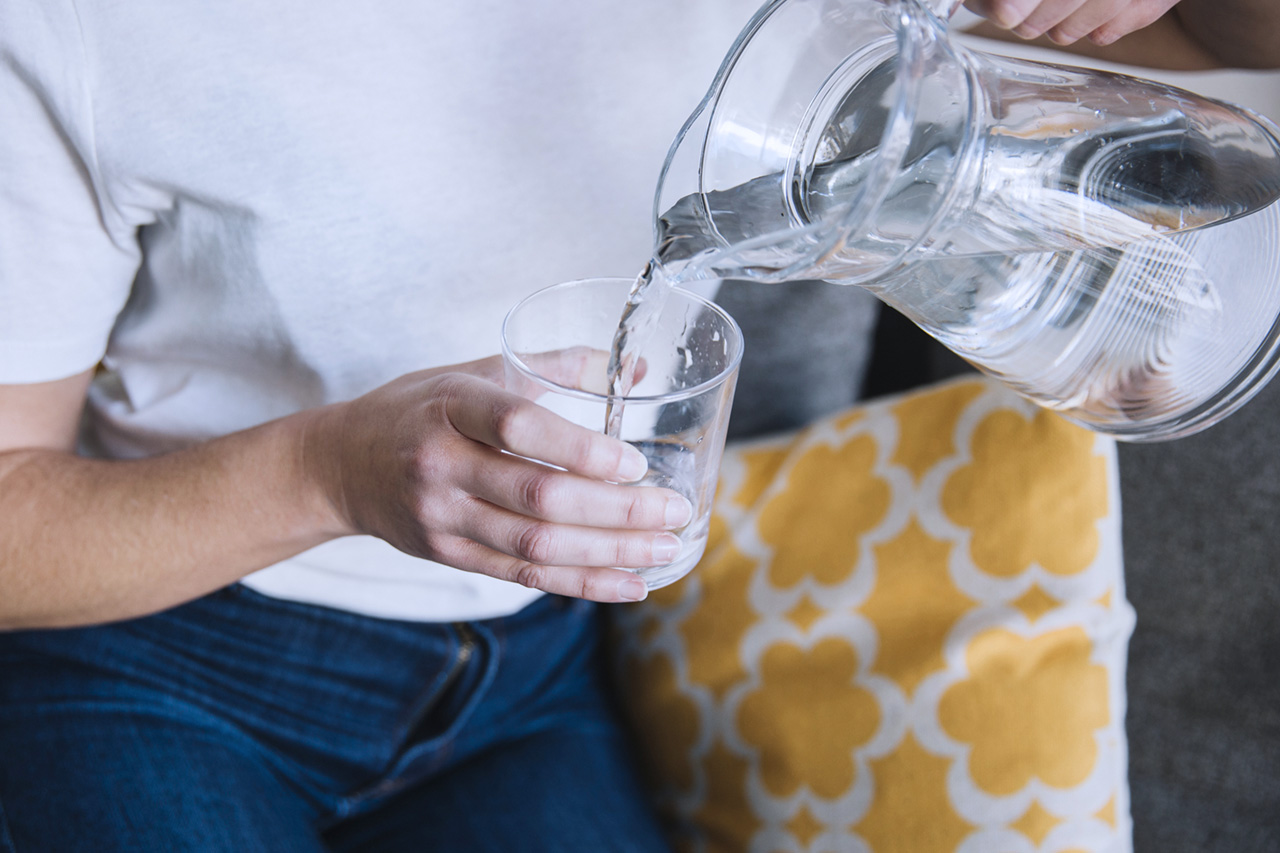
Direct water consumption is the amount of water we use daily in activities we can see and control. It includes the water we use for drinking, cooking, hygiene, cleaning, or watering plants. It is the most visible and personal type of water use, the result of our decisions and daily habits.
Part of the water we use is returned to nature with physical, chemical, or biological modifications. These changes cause different levels of water pollution. For example, when we brush our teeth, the water used becomes contaminated with fluoride and other ingredients. This mixture flows back through the pipes as wastewater, which is not suitable for consumption without proper treatment.
An eye-opening fact
According to the World Health Organization (WHO), a person needs at least 50 liters of water per day to cover basic needs. However, in Argentina, average consumption exceeds 500 liters per person per day—ten times more than necessary. (fuente: Government of the City of Buenos Aires - In Spanish).
Your decision matters
Turning off the tap, not letting the water run, or reusing it whenever possible are simple actions that make a big difference. With every decision you make, you help protect this essential and limited resource.
Remember that direct water consumption represents only 4% of the freshwater you use. The other 96% of your water footprint comes from indirect water consumption.
Indirect Water Consumption
Indirect water consumption, or virtual water, refers to the use and pollution of water associated with the production of the goods and services we consume. It includes the water needed to produce food, clothing, paper, energy, services, and industrial goods we use. It is the water we don’t see, but that is used to make the products and services we choose to consume.
We are not always aware that our water footprint includes both direct and indirect water consumption. Both represent part of the planet’s freshwater that we use in our daily lives.
Almost all production processes require water. For example, producing a notebook takes between 600 and 1,000 liters of water—from making paper pulp to the industrial processes of dyeing, binding the sheets, and transporting the finished product. Water is consumed at every stage of production.
Learn about other examples of indirect water consumption to make sustainable decisions:
