
Food and Water Footprint
Food production is responsible for most of the world’s freshwater consumption, using about 70% of total global water withdrawals. Every ingredient that reaches our table carries a water footprint that includes the water used to grow, process, package, and transport it.
The water footprint of food is a key indicator that connects our lifestyle choices with sustainable water management at a global level. As the population grows and climate change alters rainfall patterns, improving water efficiency in agriculture, livestock, and the food industry becomes a top priority.
Did you know that…
Diets high in processed foods and those with a large proportion of animal products—especially meat from ruminants—generate a much larger water footprint than plant-based diets.
Producing 1 kg of beef requires an average of 15,400 liters of water in feedlot feeding systems, but pasture-fed cattle use about 50% less water.
Facts that make an impact:
- A 100-gram bar of chocolate requires between 1,700 and 2,400 liters of water to produce.
- Growing and processing the coffee needed for a 125 ml cup requires 140 liters of water.
- Producing a 250 ml cup of milk requires approximately 200 liters of water.
- Producing 1 kg of tomatoes requires about 214 liters of water.
Source: Water Footprint Network
Your actions matter:
- Include more seasonal fruits, vegetables, and legumes in your diet.
- Prioritize locally produced foods to reduce the water footprint of transportation.
- Avoid food waste: plan your shopping and store food properly.
- Reuse leftovers and compost organic waste.
Every food choice not only protects your health — it also protects the planet’s water.
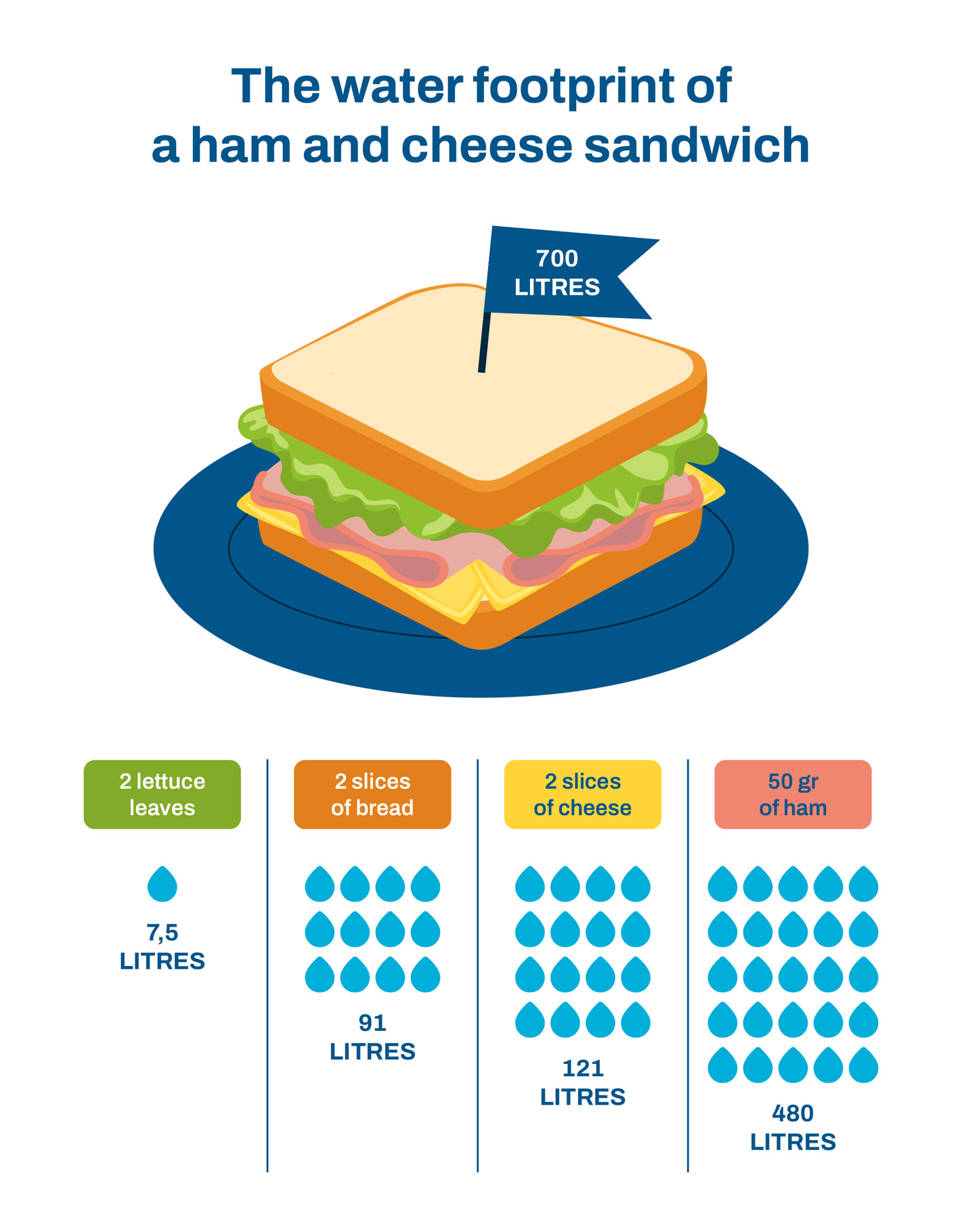
Adapted from Foodprint.org.